
• About Steven Gregory

Steven Gregory

~ Exposing Today's Health and Wellness Realities

Steven Gregory

Monthly Archives: December 2015

Today’s Exposure: Care Givers–You get what you pay for?

27 Sunday Dec 2015

Posted by Mark Netoskie, MD in Uncategorized

≈ Comments Off on Today’s Exposure: Care Givers–You get what you pay for?

Tags

care givers, health aids, home care

As caregivers for my brother, our family has been told a lot of things over the years.  Probably the hardest to hear and understand was regarding home aid services: “well, you know that home aids don’t make very much money”.  I am not sure how to interpret this statement.

At the most difficult time in my brother’s life, we need help at home with his day to day care.  These are services that traditional insurance rarely pays for, though Medicaid does support this service for some types of patients.  For the rest or for better options that don’t take insurance, aid services are completely out of pocket.   When home services became available through Steve’s Medicaid plan, we had a vision of caring, thoughtful people that understand the family needs and would be willing to become a part of our life.

As it turned out, multiple aids were interviewed and hired from multiple agencies.  We never found someone that worked in our situation.  For us, common themes were noted:

  1.  Most were recently “trained”.  Few correctly understood common aid skills such as transferring, lifting and bathing.  Most were either very young or much older.
  2. It was very difficult to find someone that could speak our language (English).  I was challenged to understand why it was so difficult to meet this need.  I felt that those in our community that lacked English proficiency fared better regarding this issue.
  3. Practically all of the aids were single parents, lacked transportation, or had their own health problems making them unreliable for my family.  The key to trust and security in these situations is reliability.
  4. For those that lasted more than a few weeks, most left for better paying jobs.

For the aids that came to our door, we did not accept a “warm body”.  Those that we found to be literally sleeping on the job, listening to music, eating our food, or doing things to my brother that were inappropriate were let go.  One disgruntled aid reported my mom to Adult Protective Services for not feeding my brother.  That was fun.

My belief is that this is not just about paying more for aids to deliver better care.  Part of the challenge in this industry as well as in other areas, is that we are not hiring the right people.  We are not adequately selling the beauty of assisting families through the difficult stages of life.  We are not weeding out inappropriate applicants.

Being an aid does not require advanced math skills.  But it does require a healthy amount of empathy, common sense, a willingness to partner with family members and to take on the risk of  becoming emotionally involved with those that require care, often at the end of life.  No–pay is not great, but the value that good aids bring to families is immeasurable.  It is unfortunate that our society does not reward more for keeping families together.  We know that failure to support families through difficult times can result in greater ER use, inpatient hospitalization, and increased illness for caregivers, both physical and mental.

It is good that these workers now have minimum wage benefits:

https://youtube.com/watch?v=IwMP9ghvKKs%3Frel%3D0%2522%2520frameborder%3D%25220%2522%2520allowfullscreen%253E%253C

Those that run aid agencies should to do a better job at attracting the right talent for these important roles.  Check in with families early in the care process to determine gaps that need adjustments.  Do not tolerate the uncertainty created by poor work effort.  Families deserve more than what they are getting.  We need to develop a better way to promote quality transparency within this service category for family caregivers.

What are your thoughts and experience?
When helping hurts

22 Tuesday Dec 2015

Posted by Mark Netoskie, MD in Uncategorized

≈ Comments Off on When helping hurts

Tags

care coordination, health navigation, home care, patient disruption

85

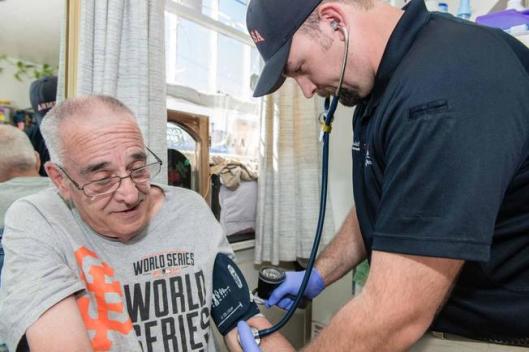
Photo courtesy USNews

Do you access customer disruption when providing service?  Within many industries, and especially healthcare, providing assistance can adversely impact the daily routine of the patient and/or family.  Generally, little is done to minimize these adverse outcomes.  Consider the simple act of having a nurse come to the home 3 times per week for evaluation and labs:

  1.  Which days?  What happens if a day must be changed?  Will that impact medication administration?  Lab testing?  etc?
  2. What time of day?  Will the visit interfere with meals, other routine appointments, and social activities?
  3. What is the recourse if the caretaker doesn’t show up?  Do they call you or you call them–or a third party?  What is the back-up plan?  What if that fails?
  4. Will the nurse be the same or will this be whomever is available?  Does continuity matter for care?  Will this cause more confusion for the patient and/or family?

As you can see, there are multiple opportunities for things to go wrong often leaving the patient in the middle.  Of course, there are usually phone numbers to call but those on the other end generally relay information to those that can respond, leading to further delays and potential gaps in care.

Unfortunately, the public has grown accustomed to this “yellow cab” experience–you get what we send you or you can call someone else.

For patients, especially those that are homebound or with complex disease, it is vital that each day has reasonable predictability.  Long waits, missed meals, altered caregivers can all lead to challenges that are often invisible to those that are delivering care.  If you are a provider, are you addressing this aspect of your operation?

If you are a patient or relative caregiver, are you putting up with uncertainty and confusion?  Are you demanding accountability from those that are serving you?  You have the right to know how to engage with someone that has the authority to address any of your concerns.  If paid for by insurance, who is your case manager (or how can you obtain one)?  Find out who regulates the service since most providers must abide by minimum standards of care at the local, state or national level.  Report problems if not resolved.  Obtain the services of an advocate, sometimes referred to as patient navigation.  Call 2-1-1, the national local resource organization (www.211.org).

Resources can be very useful at times, but can be applied in a disruptive way, impacting preferred outcomes.  If you are a provider, think about your process and how to minimize these issues.  If you are a patient, take action to report concerns to those that can assist.

Health Ownership

20 Sunday Dec 2015

Posted by Mark Netoskie, MD in Our Health Ecosystem

≈ Comments Off on Health Ownership

Tags

change, health, health maintenance, incentives, responsibility

Is the hesitation to assign personal responsibility for one’s own health a reflection of society’s acceptance of excuses? Optimal health generally requires behavior that supports it. Genetics and bad luck aside; physical, behavioral, and social challenges often become the reason for status quo rather than the spark for changes that can improve ourselves.

IMGP3083

Working with employers it is very interesting that as wellness teams and health strategies move down their pathways, they invariably get to the point where the easy stuff is done. Health assessments, biometrics and activities make everyone feel better because they are easy to do and measure. But are people changing? Often the answer is–not enough of us. And that means a lot of work for little meaningful health improvement.  Are we to blame?

The next step, and it is a difficult one, is outcomes-based programs. That means that besides doing “stuff”, you actually need to either maintain near-optimal health status (if you are actually healthy) or improve in some way (within accepted ACA rules around incentive programs). People hate being told to change when they are not ready. But how long should we wait? How sick do we all have to get before the finances force us to improve or go broke caring for preventable disease?  If you have health insurance through an employer, what do you think about them charging you more if you don’t do all you can to stay or become healthier?

As a society, we should expect that each individual do whatever he or she can to preserve their own health. Good health reduces our dependence on the system, maintains our ability to stay productive and happy, and insures that we remain vital as we move through life. As with our education, government, and legal systems, we should not shy from demanding excellence and meaningful outcomes within healthcare. But we all impact health outcomes. If we do not hold each other accountable, we will be faced with increased disease burden and cost. And the sad reality is that failure to change both ourselves and each other in terms of health status will result in this generation living poorly and dying sooner than they should.  Should we consider health maintenance and improvement our patriotic duty?

IMGP3134_2

There are many challenges and opportunities regarding health in America and this is a complex and difficult issue. But like so many problems that we face in the world, we must look in the mirror first for change that is needed within ourselves. We must participate in creating and nurturing health ecosystems that provide encouragement and support for health improvement.

Are health ecosystems complex organizations run by fancy accountable care organizations (ACOs)? They don’t have to be. An ecosystem could be some of your friends holding each other responsible for what you order at the restaurant. It could be a team of work colleagues that really understand the health plan and how to obtain resources or a group that shares a common health concern that can meet at work to discuss their challenges and successes. Whatever fosters individuals caring for each other’s health is the goal.

We must remember that traditional caregivers do not “own” our health. We do!  What do you think?

Recent Posts

  • Today’s Exposure: Good Grief January 14, 2016
  • Today’s Exposure: Care Givers–You get what you pay for? December 27, 2015
  • When helping hurts December 22, 2015
  • Health Ownership December 20, 2015

Recent Comments

Archives

Categories

Meta

  • Create account
  • Log in
  • Entries feed
  • Comments feed
  • WordPress.com

Recent Posts

  • Today’s Exposure: Good Grief
  • Today’s Exposure: Care Givers–You get what you pay for?
  • When helping hurts
  • Health Ownership

Recent Comments

Archives

  • January 2016
  • December 2015

Categories

  • Our Health Ecosystem
  • Uncategorized

Meta

  • Create account
  • Log in
  • Entries feed
  • Comments feed
  • WordPress.com

Blog at WordPress.com.

Privacy & Cookies: This site uses cookies. By continuing to use this website, you agree to their use.
To find out more, including how to control cookies, see here: Cookie Policy
  • Subscribe Subscribed
    • Steven Gregory
    • Already have a WordPress.com account? Log in now.
    • Steven Gregory
    • Subscribe Subscribed
    • Sign up
    • Log in
    • Report this content
    • View site in Reader
    • Manage subscriptions
    • Collapse this bar
 

Loading Comments...